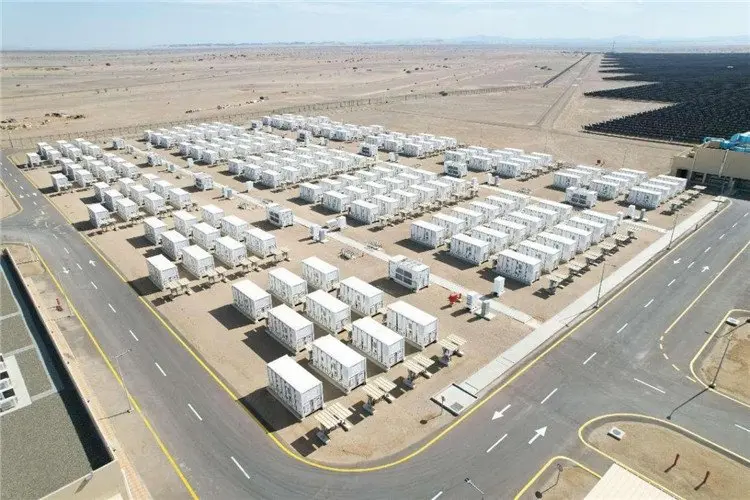
Wide-Span Light Gauge Steel Buildings
Column-free light steel buildings that span 6m to 12m without internal posts, built for dining halls, canteens, kitchens, project offices and meeting rooms on Saudi camps and project sites.
Open-plan layouts, kitchen service lines and large HVAC routes are resolved before fabrication.
Wide-Span LGS Buildings
Systems.
Compare wide-span LGS building systems for site offices, dining halls, canteens, kitchens, meeting rooms and camp support facilities.
0 Products Found
0 Products Found
What Wide-Span LGS Gives The Building
The clear-span frame carries the roof load through the sidewalls, with no columns inside the building. The floor stays fully open for seating, workstations and service runs, and the internal layout is set by the room function rather than the structure. Layouts are fixed at design stage, before fabrication.
Clear floor space for dining, offices, training rooms and future layout changes.
01. Column-Free Floor
The frame is supported at the sidewalls, leaving a clear internal floor. Dining, office and training areas are laid out to the required seating and circulation, with no internal columns to plan around.
02. Non-Load-Bearing Partitions
Internal walls carry no structural load. Rooms can be split, resized or combined at design stage without changing the steel frame or the foundation.
03. Continuous Insulation Line
The wall and roof line runs without internal columns, so insulation is installed as a continuous layer across the envelope. This reduces the thermal bridging that occurs at internal structural points.
04. Bay Expansion
Additional length is added by extending bays at the end wall. A building can be sized to the current headcount and extended later without redesigning the frame.
Wide-Span LGS Technical Range
These figures are the starting range for a wide-span LGS proposal. Steel size, panel build-up and floor load are confirmed against building use, site location and MEP load at design stage.
Clear Span Capacity
6m to 12m column-free span; 2.8m to 3.3m eave height.
Span and eave are set to the room function and confirmed against roof type and wind load.
Frame Steel
Cold-formed galvanized steel sections, grade Q235B / Q355B, combined with built-up steel members at the main frame.
Section sizes follow the structural calculation for the project span, eave height and site wind exposure.
Roof Structure
Prefabricated steel roof trusses carrying the span to the sidewalls, at 8% slope for natural drainage.
Truss spacing, bracing, AC routing and ceiling load are set in the structural design. Deflection is designed to a span/250 target.
Wall & Roof Insulation
100mm aluminium-foil-faced glass-wool insulation; A1 non-combustible.
Insulation build-up is selected for heat, dust and fire-rating requirements at the project location.
Floor
Reinforced concrete ground slab, finished to the building use; raised steel floor available where required.
The slab and foundation are confirmed against floor reactions and listed as a site interface in the scope.
Exterior Finish
ACP cladding, textured render coating or partial glass curtain facade.
Finish is selected to the building exposure and the required external appearance.
For a technical proposal, send the span, eave height, building use, required rooms and MEP load list. We confirm the specification range before quotation.
Send Technical BriefWhat Wide-Span LGS Buildings Are Used For
One column-free shell covers a range of camp and project buildings. The span, eave height and openings are set to the function, from open seating areas to high-clearance storage.
Camp Offices
Workstation Bays / Open Floor PlanOpen floors for workstation bays and document control. Partitions are set to the team layout, not to column positions, and confirmed at design stage.
Meeting Rooms
Project Meetings / CoordinationEnclosed meeting and coordination rooms within the same shell. Room sizes are set in the layout without adding structural columns.
Dining Halls & Mess Canteens
High-Density Seating / Servery FlowColumn-free dining and mess spaces for large headcounts, with open seating, clear sightlines and servery circulation planned before fabrication.
Kitchens
Service Access / Exhaust ProvisionThe shell supports kitchen buildings with exhaust, drainage and service access provisioned in the structure. Full kitchen engineering is covered on the camp kitchen product page.
Training Rooms
Induction / Toolbox TalksOpen rooms for HSE induction and toolbox talks. Seating capacity and circulation are set to the daily headcount.
Multi-Purpose Halls
Briefing / Events / Flexible UseOpen column-free halls for briefings, project coordination, training events and temporary project functions where the layout may change by use.
Camp Welfare Buildings
Recreation / Prayer / Common RoomsOpen shells for recreation and common-room functions. The layout is set to the welfare use without internal load-bearing walls.
Warehouses
Clear Height / Wide Door OpeningsHigher eave and wide door openings for material storage. Clear height and door size are set to the stored items and handling equipment.
Workshops
Equipment Clearance / Service RoutesColumn-free floor for workshop operations, with equipment clearance and service routes planned in the layout.
Store Rooms
Floor Loading / Access ControlEnclosed store rooms with floor loading set to the stored material. Access points are positioned in the layout at design stage.
Production Sheds
Heavy Floor / Line ClearanceOpen production floor with clearance for the line and heavy floor loading set to the equipment listed at quotation.
Send your layout drawing or room list. We confirm the span, eave height and openings for the building use before quotation.
Project Reference
Selected Projects
Labour camps, workforce accommodation and site office complexes supplied to contractors and project operators across the Kingdom.
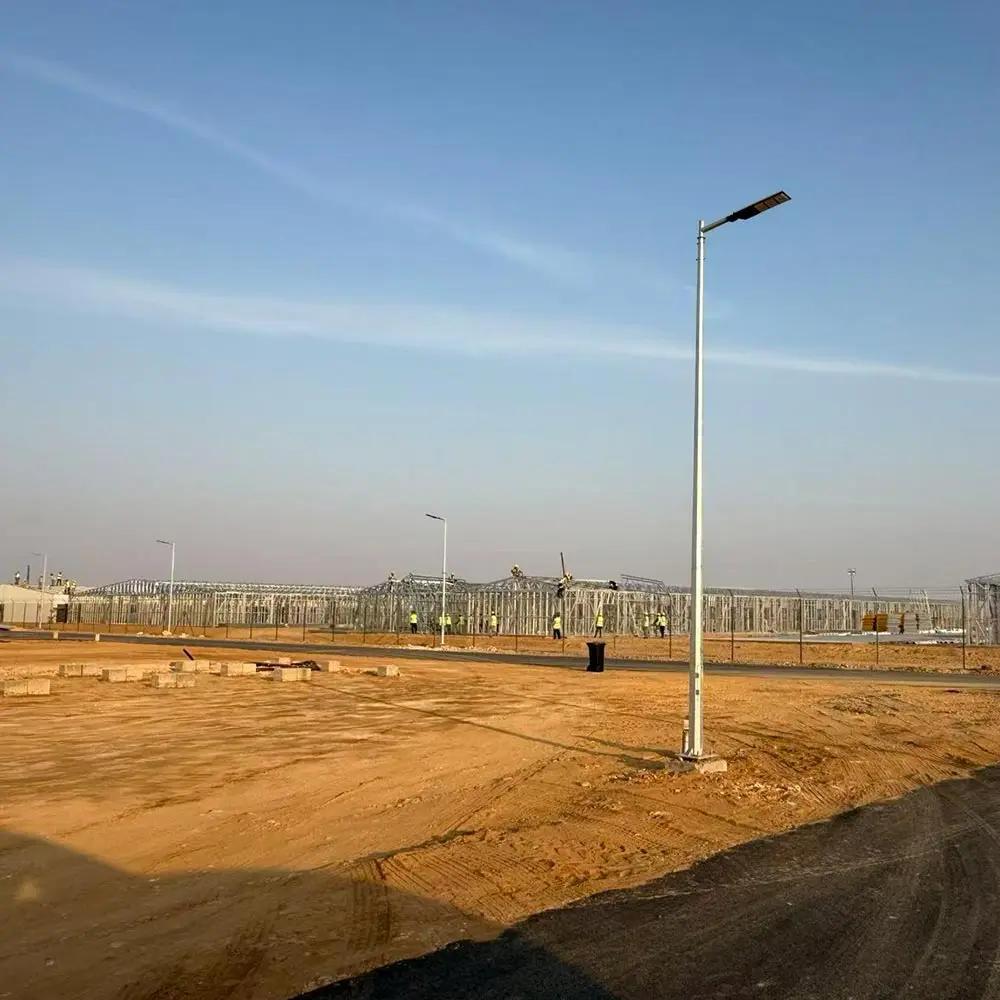
Aluminium Park Facilities
More than 8,000 m² of temporary construction support facilities completed within 30 days, covering canteen, commercial street, warehouse and LV power room.
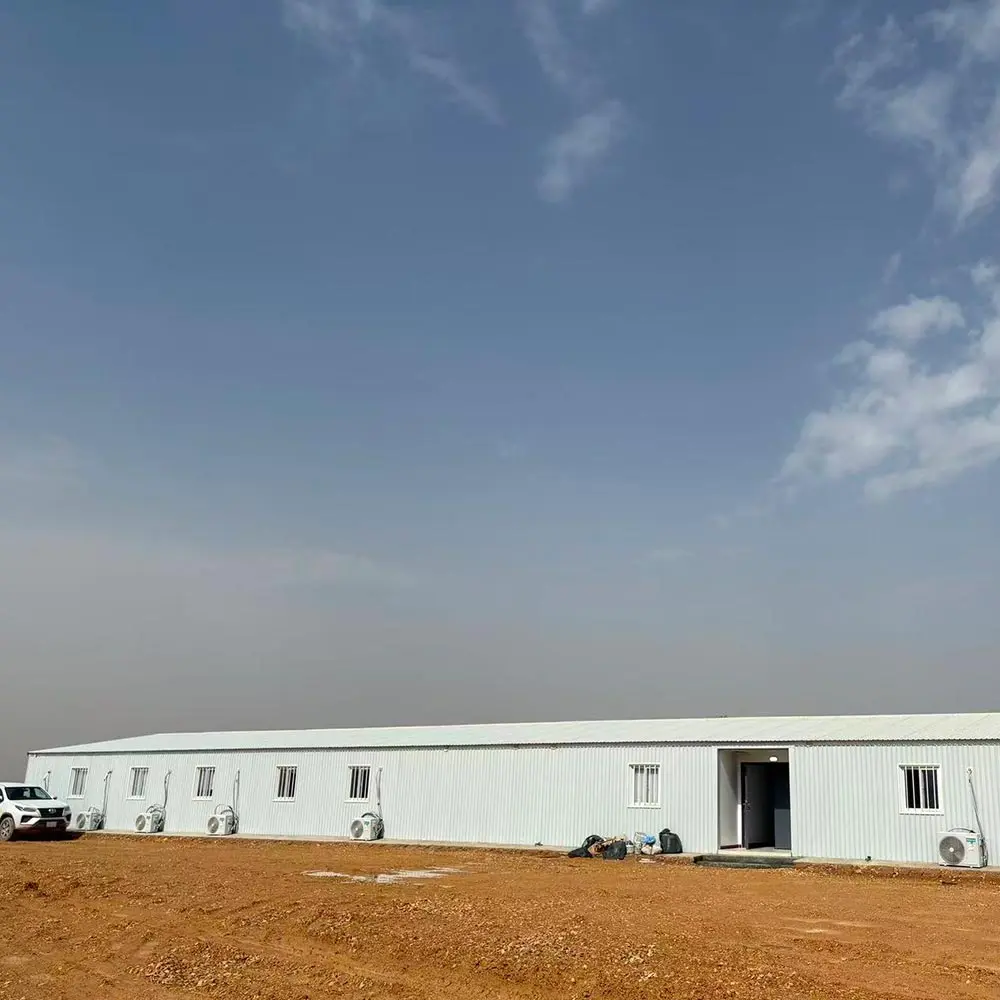
Qassim Cement Line 4 Camp
Approx. 1,530 m² light steel camp scope covering office, accommodation and reception areas, with layout design, material supply, transport and installation.
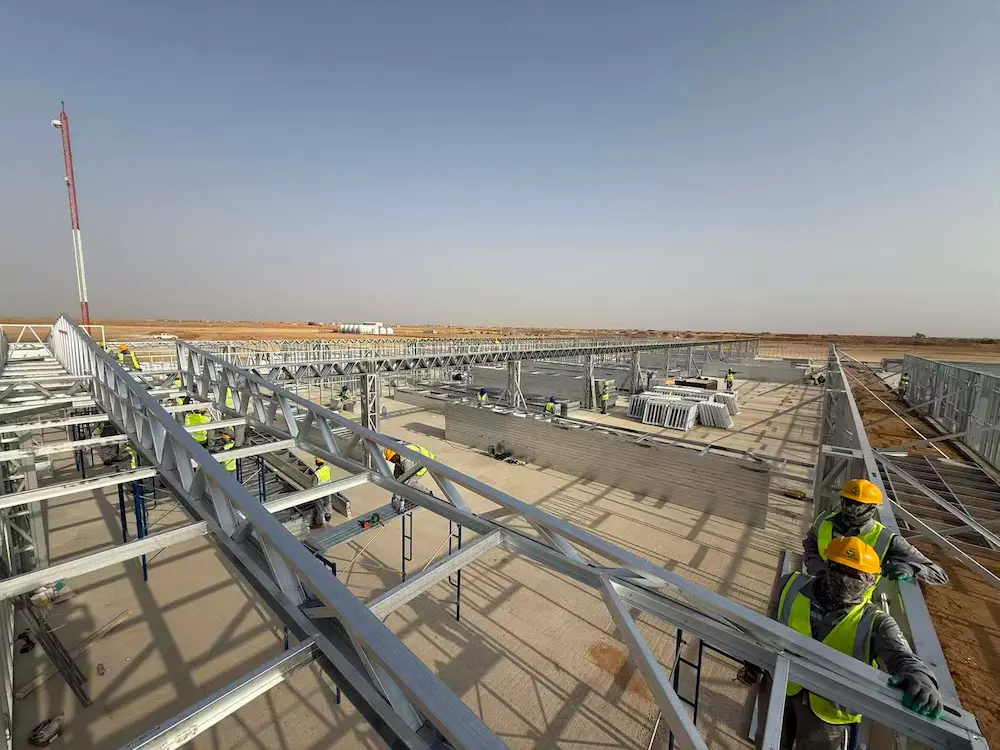
ACMC Supercenter Site Offices
Temporary management facilities for ACMC KSA Supercenter Phase 1, including company office, safety training room, construction team office and QC team office.
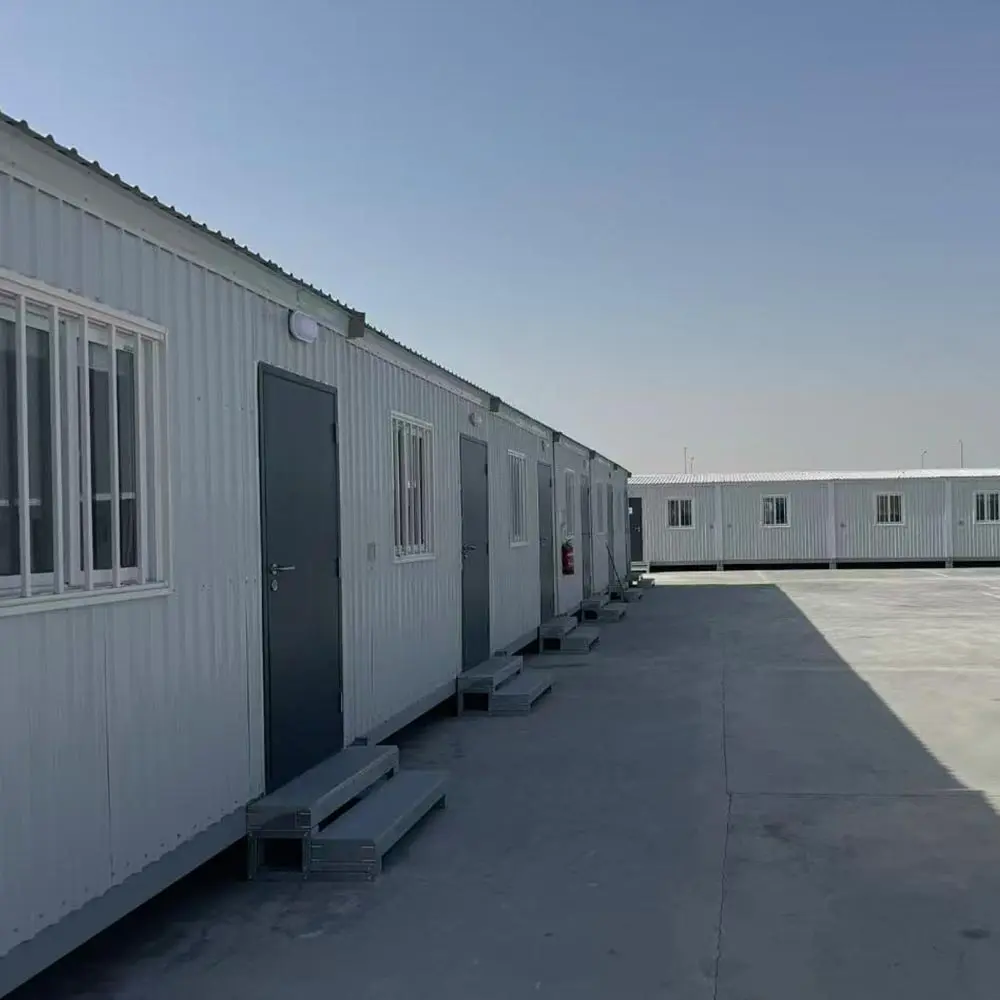
Tahweel Aluminium Plant Camp
Office and living support package for an aluminium foil plant, including 33 offices, guard room, male/female washrooms, water tank, septic tank and electrical support.
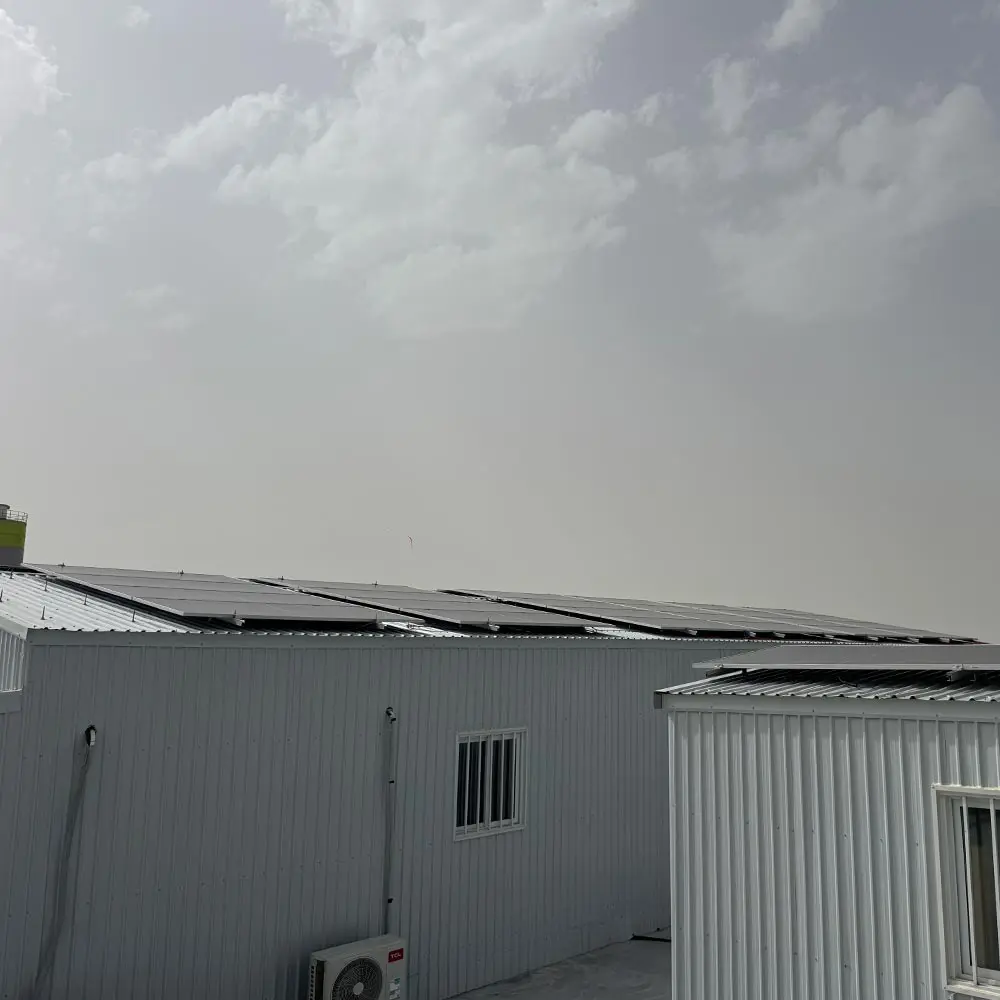
Temporary Camp Facilities Upgrade
Supplementary camp package covering C89 light steel roof and wall reinforcement, an off-grid energy storage container and a light-steel washing shed for kitchen support.
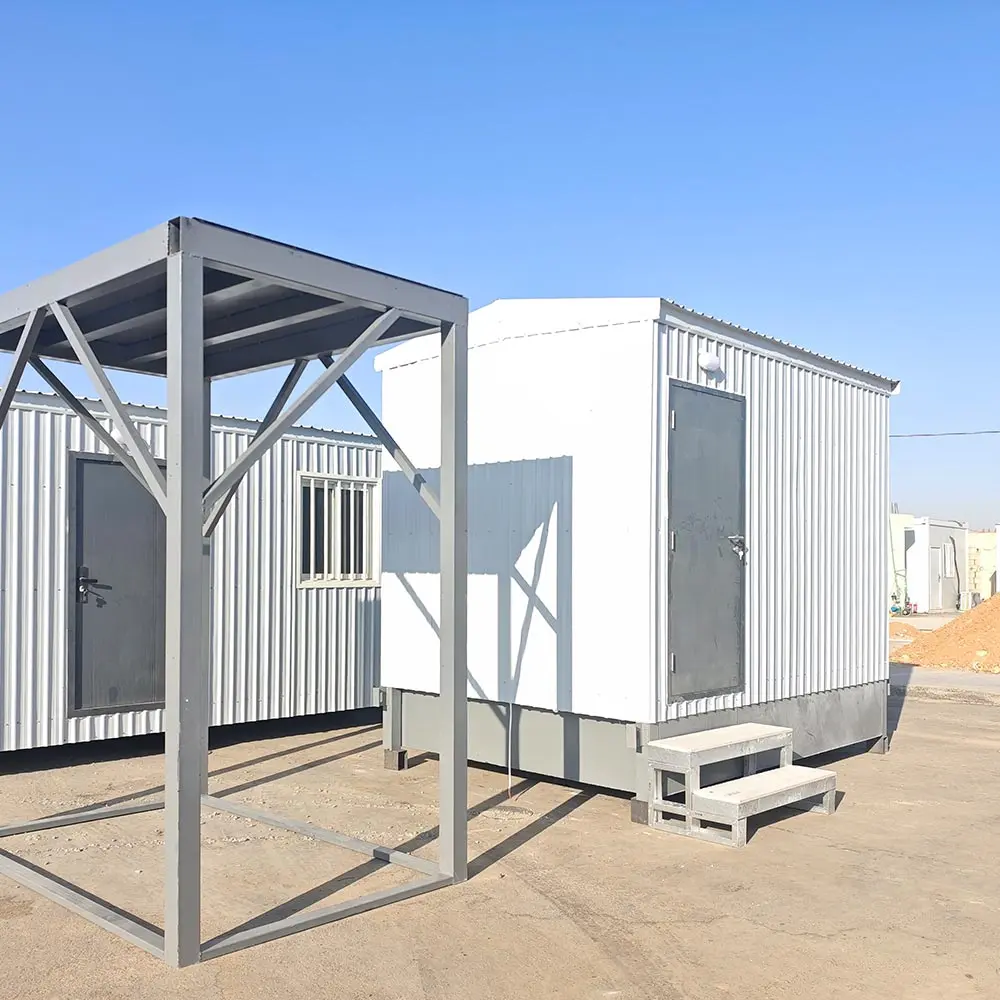
PIF5 Shaqra Wind Project Camp
55 modular buildings for offices, accommodation, guard post and laboratory spaces, with insulation and material configuration for Saudi desert project conditions.
Wide-Span LGS Buildings Made In Saudi Arabia
Saudind manufactures wide-span LGS buildings in a Saudi local factory, with stock and installation crews based inside the Kingdom. EPC and owner teams deal with one in-Kingdom supplier across production, delivery and after-sales, and receive the documents needed for vendor registration and project submission.
Full BOQ Traceability
Every frame, panel and opening is checked against the approved drawings before production.
Saudi Factory Pack
Frames, panels, doors, windows and service openings are packed as one site-ready set.
Installation Support
Span load, bracing and the foundation interface are reviewed with the site team before assembly.
Local Stock Access
300+ common hardware SKUs support faster replacement for missing or damaged site parts.
Quality System
Production, environmental control and site safety run under documented management systems that support supplier review and project document submission.
Submission Documents
- Structural calculations and stamped drawings for the building.
- Mill certificates and material data sheets for the frame and panels.
- Method statements for site installation and handover.
Saudi-Rooted Operations
Factory, warehouse and installation crews are based inside the Kingdom. Local manufacturing supports the in-Kingdom content that procurement teams weigh during vendor evaluation.
- 15,000 m² production and warehouse facility in KSA.
- 100+ installation crew members inside the Kingdom.
- Local stock replenishment independent of project batch cycles.
Factory Proof In Project Details
Production evidence is shown through the parts that reach site: labelled frames, packed panels, sorted hardware, installation sequence and handover support.
Drawing Review
Layout, openings and structural notes verified.
BOQ Issue
Factory-verified material list to procurement.
Factory Prep
Frame cutting, panel preparation and service-opening reservation.
Pack & Load
Labelled and loaded per site schedule.
Installation
Crew briefed from the same factory drawing set.
Handover
Checklist sign-off, local parts support active.
For a delivery proposal, send the site city, facility list, layout drawing, target handover date and whether local installation support is required. We confirm drawing scope, factory batch, packing sequence and on-site support before quotation.
Send Delivery ScopeWhat Buyers Ask Before Ordering A Wide-Span LGS Building
These questions come from project managers, camp planners, and EPC procurement teams who already know what a portacabin is and now need something bigger, open, and column-free. No basic definitions. Straight answers on the things that actually affect your decision.
Our standard range for wide-span LGS buildings is 6 to 12 metres of clear internal width, with no intermediate columns in that span. For camp dining halls and open-plan offices, this covers the vast majority of what projects in the Gulf require.
Beyond 12 metres, the structural system changes: the cold-formed LGS portal frame transitions to a heavier steel section, lead times increase, and the engineering scope changes. If your brief needs more than 12 m clear, tell us at the start. We will confirm whether the span is achievable under our current scope or whether it requires a different structural approach and a separate quotation.
In theory yes, but in practice camp dining halls have specific constraints that make columns a real operational problem, not just an aesthetic one.
- Food service line: a column in the wrong position interrupts tray flow and creates bottlenecks when 300+ workers are queuing in a single sitting.
- Table layouts: rectangular dining tables in rows lose 20-30% of usable seating capacity when you have to route around columns.
- Emergency egress: Saudi Civil Defense requirements for assembly buildings specify clear exit routes, and interior columns reduce the number of compliant layouts available.
A 200-person camp dining hall that gets its table layout right can seat the same headcount in a smaller footprint than one that does not. Column-free span is a functional requirement, not a preference.
For a camp dining hall, the standard planning figure is 1.2 to 1.5 m² per seated person, including table, chair, and circulation. That covers the dining area only. It does not include the serving counter, kitchen pass-through window, or storage.
A practical example: a camp of 500 workers eating in two sittings needs a dining hall for roughly 250 seats at a time. At 1.4 m² per seat, that is approximately 350 m² of floor area, which lands at around 12 m wide by 30 m long under our standard portal frame.
For open-plan offices, the figure is typically 6-8 m² per workstation including circulation, meeting corners, and shared space. Send us your headcount and intended use. We will confirm the floor area and frame size before we quote.
A standard portacabin, or light steel frame house, is built on a 3 m or 6 m structural grid with columns at regular intervals. It works well for rooms: offices, bedrooms, clinics. It does not work for open spaces where you need 10+ metres of unobstructed width.
A wide-span LGS building uses a portal frame: two columns at the sides and a single rafter spanning the full width. This removes all internal structure from the floor plan. The insulated wall and roof panels are the same sandwich system used in portacabins, but the structural logic is completely different. You would not use a standard portacabin frame for a 200-person dining hall for the same reason you would not use it for a warehouse. Different function, different structure.
For a permanent or semi-permanent installation, a reinforced concrete pad or strip foundation is the standard approach. The portal frame columns bolt directly to cast-in anchor bolts. We provide the anchor bolt layout drawing as part of the structural package, so your civil team knows exactly what to prepare before the frame arrives.
For temporary camp buildings where relocation is planned, a steel grillage base or compacted aggregate with steel soleplate is possible, but the span, load, and site conditions need to be reviewed before we can confirm this. Do not assume a temporary foundation works for a building over a certain size without checking with us first. The consequence of getting it wrong is a building that moves under wind load or settles unevenly.
For a typical dining hall of 200-300 m², the on-site installation time is 15 to 30 working days from foundation-ready to handover. This assumes the civil foundation is complete and the site has clear crane access.
The breakdown is roughly:
- Portal frame erection: 3-5 days depending on span and bay count
- Roof and wall panel installation: 5-10 days
- Doors, windows, and trim: 3-5 days
- MEP first fix and fit-out: 5-10 days
Factory lead time runs in parallel. Structural steelwork is fabricated in 7-15 days from our Riyadh factory after drawings are confirmed. The total time from brief to handover is typically 4 to 6 weeks for a standard dining hall or open-plan office. Tell us your NTP date and we will give you a milestone schedule before you commit.
Yes. The portal frame end walls and side walls can be infilled with aluminium-framed curtain glazing, strip windows, or a mix of opaque panels and glazed sections depending on the brief. This is most commonly specified for project management office buildings and client-facing reception buildings where appearance matters.
For dining halls on construction camps, full glazing on the south or west elevation is generally not recommended. The solar gain in a Saudi summer will push AC load significantly higher and create comfort issues even with double-glazed units. North-facing and east-facing glazed elevations are more practical. We flag these points at the drawing stage, not after the building is finished.
This is a legitimate concern. A 12 m wide, 30 m long dining hall has roughly 360 m² of exposed roof. That is a significant heat surface in a Saudi summer. The approach we use is the same principle as in our portacabin range, applied at a larger scale:
- 50 mm rockwool or glass-wool sandwich panel as the base roof spec
- Heat-reflective coating on the outer steel skin, reducing surface temperature by 15-20°C compared to uncoated steel
- Designed roof slope and drainage so ponding water on a flat large roof does not accelerate heat transfer into the ceiling
- AC sizing input based on floor area and occupancy count, which the MEP contractor uses to size the units correctly
The difference from a portacabin is scale, not approach. All of these decisions are made at drawing stage, not retrofitted after handover.
Technically yes. The portal frame is bolted, not welded, and the sandwich panels are removable. But a wide-span building is significantly more labour-intensive to relocate than a standard portacabin. The frame sections are heavier and longer, the roof rafter requires a crane to lift and lower safely, and the foundation connection needs to be cut out cleanly.
If relocation is a planned requirement, we need to know before we design the building. The base plate detail, anchor bolt pattern, and MEP disconnection points are all designed differently for a building that will move versus one that will not. Trying to relocate a wide-span building that was not designed for it usually results in damage to the rafter and panel joints that makes re-erection impractical.
Realistic relocation cost for a 300 m² dining hall: roughly 40-60% of the original installation cost, not including transport. Worth planning for upfront if the project programme requires it.
Saudind handles the complete design and build under a single contract. Structural drawings, fabrication, delivery, and on-site installation are all included. You do not need to appoint a separate structural engineer for the building itself.
What we provide in the drawing package:
- Floor plan and elevation drawings
- Portal frame structural layout with member sizes
- Foundation anchor bolt layout for your civil team
- MEP route drawing: AC sleeve positions, electrical conduit, drainage interfaces
If your project requires a third-party structural review or a stamped drawing for permit submission, let us know at enquiry stage. We can accommodate this. It affects the drawing timeline, not the construction approach.
Get a Quote
Start Your
Project Quote
Today
Send us your project details and our Saudi-based factory team will prepare a tailored proposal within 24 hours — with specs, production lead time, local delivery plan, and installation support.

Address
92P8+MG, Southern Hyt, Riyadh 14575
Support
+966 532580666
info@saudind.com