
Home / Modular Container House / Flat Pack Container House
MODULAR CONTAINER HOUSE

Flat Pack Container House.
For Worker Camps

Flat pack gives you the lowest cost per bed for large worker camps. Units are fabricated at our Riyadh factory and assembled on your site by our own crew, built to pass Civil Defense and labour-welfare inspection. Best for camps of 50 beds and up where both the budget and the move-in date are fixed.
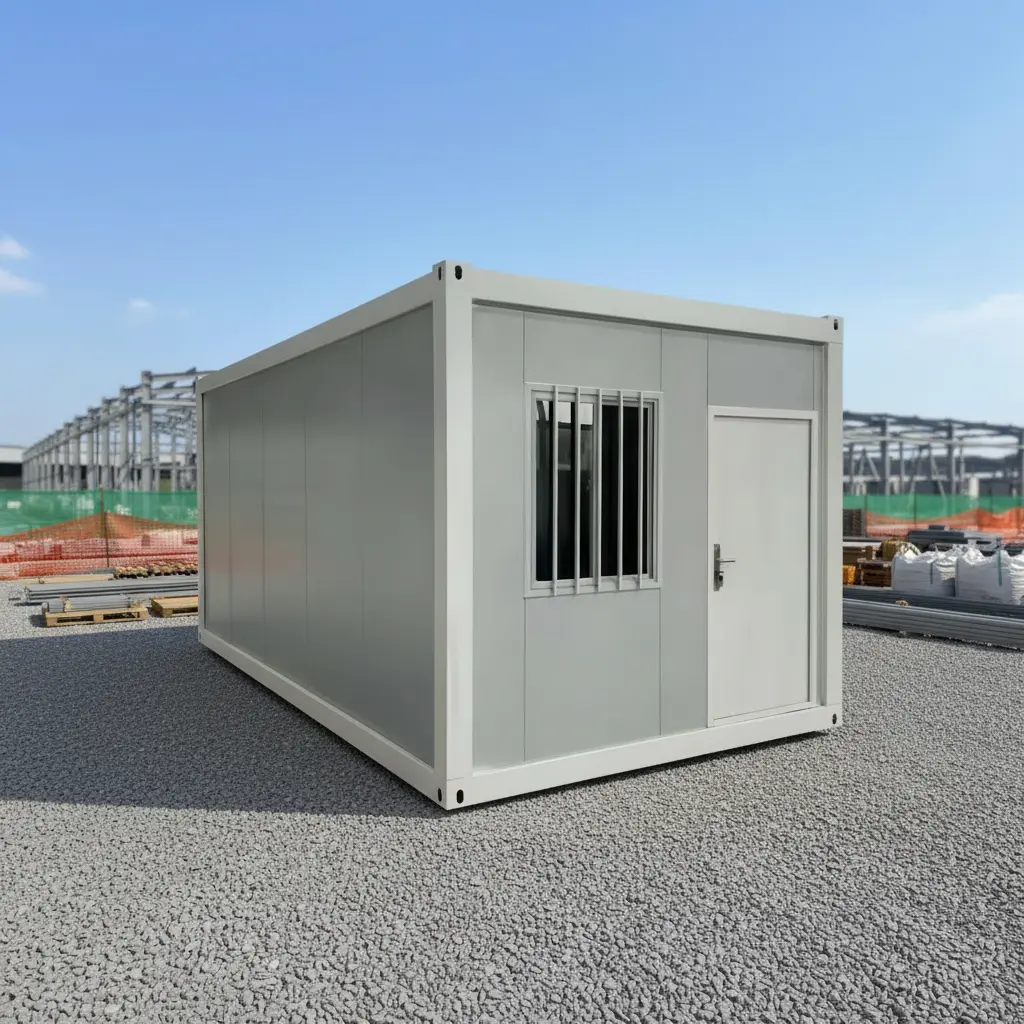
Flat pack container house project camp background
01 Camp layout before production
50+
beds
recommended
FROM 3 WK
From order to an installed camp on a prepared site
SASO 2283
Built to the Saudi labour-accommodation welfare standard
ONE CONTRACT
Fabricated and installed by our own KSA crew
Flat-pack camp supply Worker Accommodation Site Offices Ablution Units EPC Camps Remote Projects
Riyadh Factory KSA Installation Crew Camp Layout Support Inspection-Ready Handover

Flat Pack Container House Product Range

Flat Pack Container House Products for Efficient Camp Delivery

Choose from 20ft, 40ft, knock-down, foldable, insulated and bolt-together flat pack container house formats for project camps, site offices and relocatable facilities.
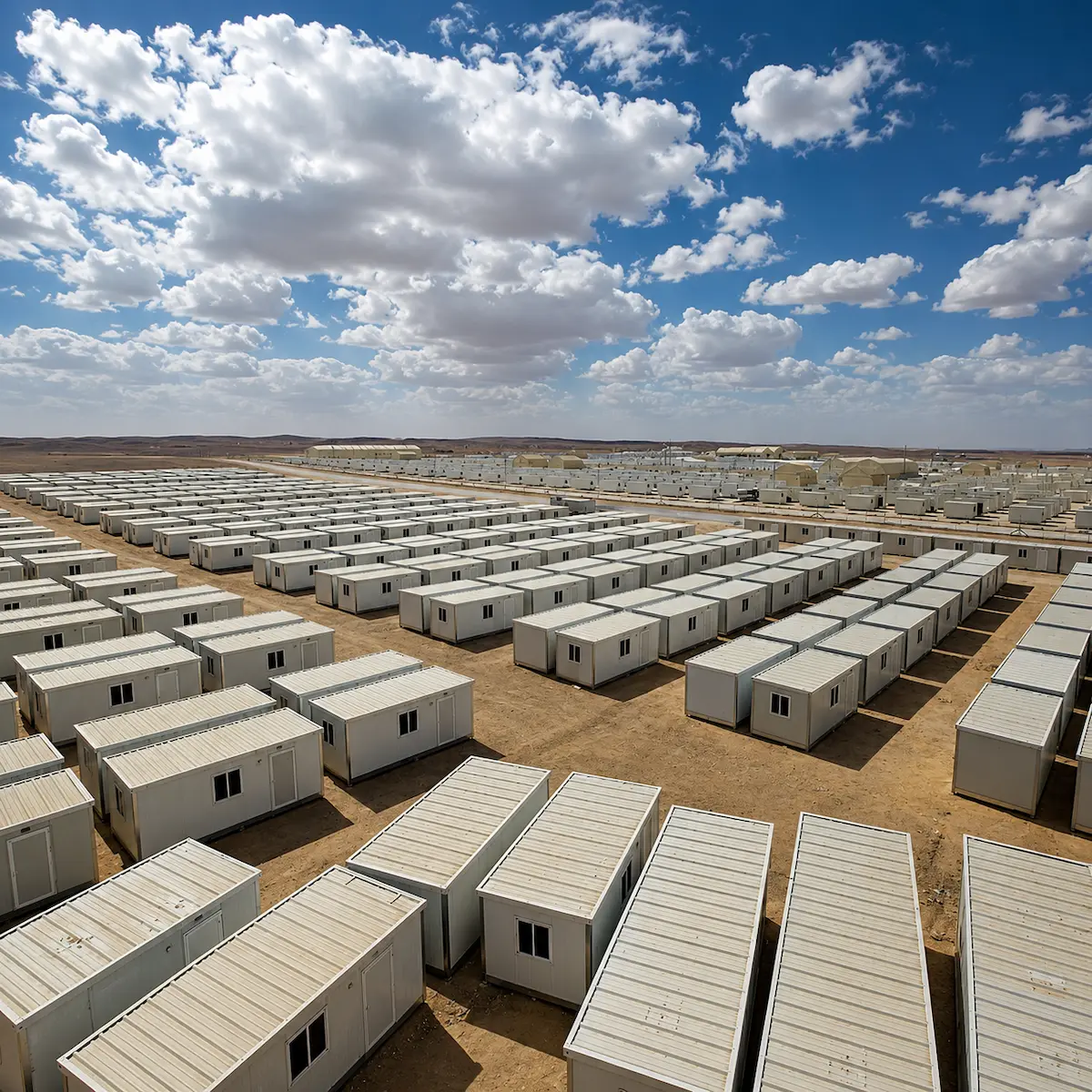
20ft flat pack container house knock-down unit

20ft Flat Pack Container House

20ft Flat Pack Container House | Knock-Down Unit

20ft flat pack container house with pre-assembled roof and floor. Walls and columns assemble on site. Up to four units in one 40ft container.

Request Product Quote
40ft flat pack container house knock-down unit

40ft Flat Pack Container House

40ft Flat Pack Container House | Knock-Down Unit

40ft flat pack container house with pre-assembled roof and floor. Larger open-plan space. Stacks up to three storeys. Joins into bigger buildings.

Request Product Quote
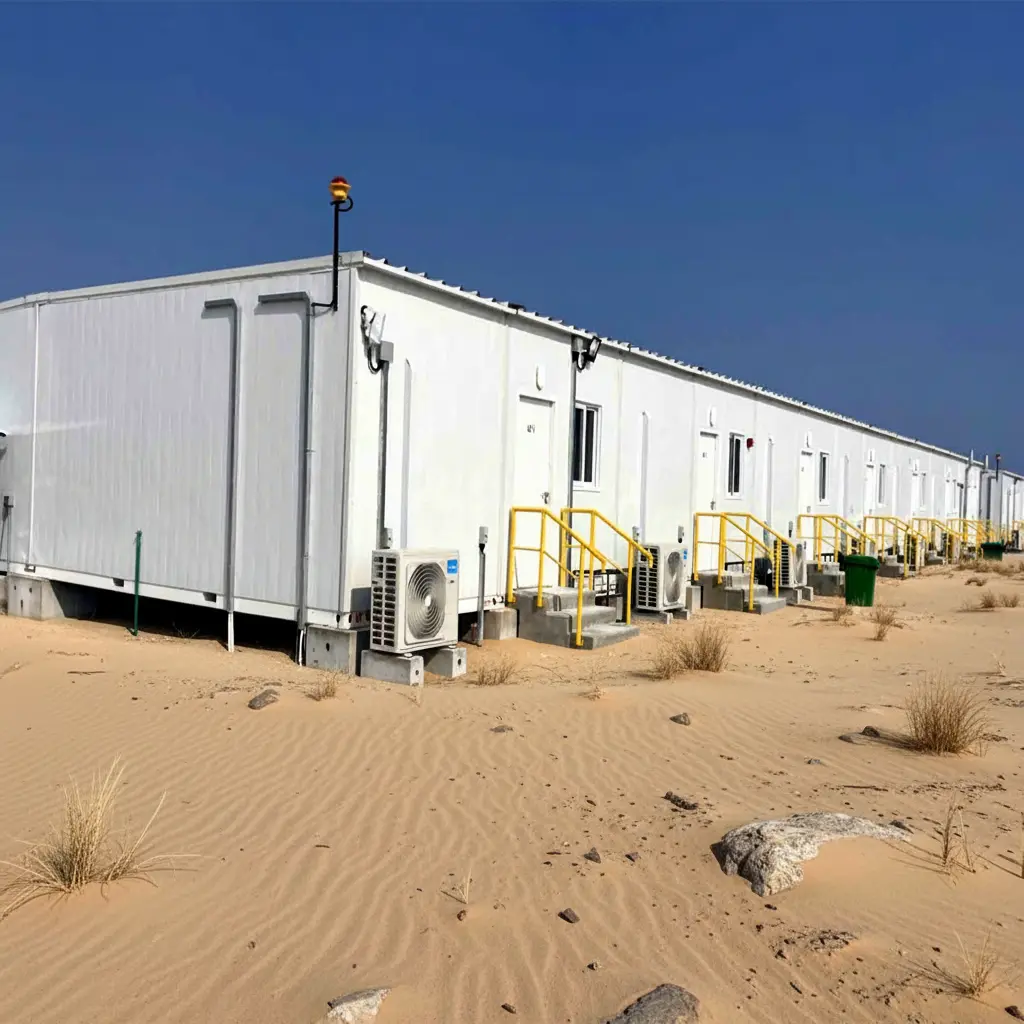
Flat pack portable cabin relocatable steel cabin

Flat Pack Portable Cabin

Flat Pack Portable Cabin | Relocatable Steel Cabin

Flat pack portable cabin for temporary and relocatable use. Steel frame with sandwich panels. Dismantles and re-erects without panel loss.

Request Product Quote
Flat pack foldable container house fold-out unit

Flat Pack Foldable Container House

Flat Pack Foldable Container House | Fold-Out Unit

Flat pack foldable container house combines flat-pack strength with fold-out speed. Faster on-site assembly than standard flat pack.

Request Product Quote
Knock-down flat pack container house KD unit

Knock-Down Flat Pack Container House

Knock-Down Flat Pack Container House | KD Unit

Knock-down flat pack container house ships fully demountable. Bolt-connected panels cut freight and need no crane to install.

Request Product Quote
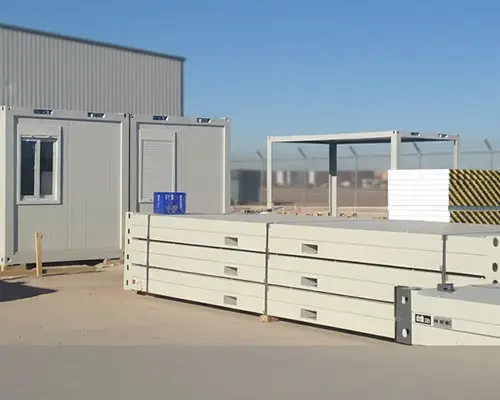
Bolt-together flat pack container house

Bolt-Together Flat Pack Container House

Bolt-Together Flat Pack Container House

Bolt-together flat pack container house assembles with bolted joints. No welding on site. Dismantles for reuse on the next project.

Request Product Quote
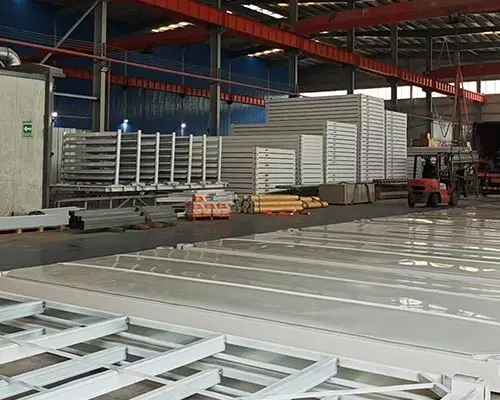
Insulated flat pack container house rock wool panel

Insulated Flat Pack Container House

Insulated Flat Pack Container House | Rock Wool Panel

Insulated flat pack container house with rock wool or glass wool panels. Holds interior temperature in desert heat. Class A fire option.

Request Product Quote
Flat pack container house price FOB cost guide

Flat Pack Container House Price

Flat Pack Container House Price | FOB Cost Guide

Flat pack container house price by size and spec. FOB and EXW basis. Cost drivers explained. Request a project quote.

Request Product Quote
KIT LOGIC

What Is a Flat Pack
Container House?

A flat pack container house is a building that ships as a kit. The steel frame, wall panels, floor, doors and fittings come flat. A small crew bolts them together on site to make a finished room. It is not an old shipping container. It is not a ready-made cabin. It is a labelled kit that goes up fast and works well when many rooms are the same.
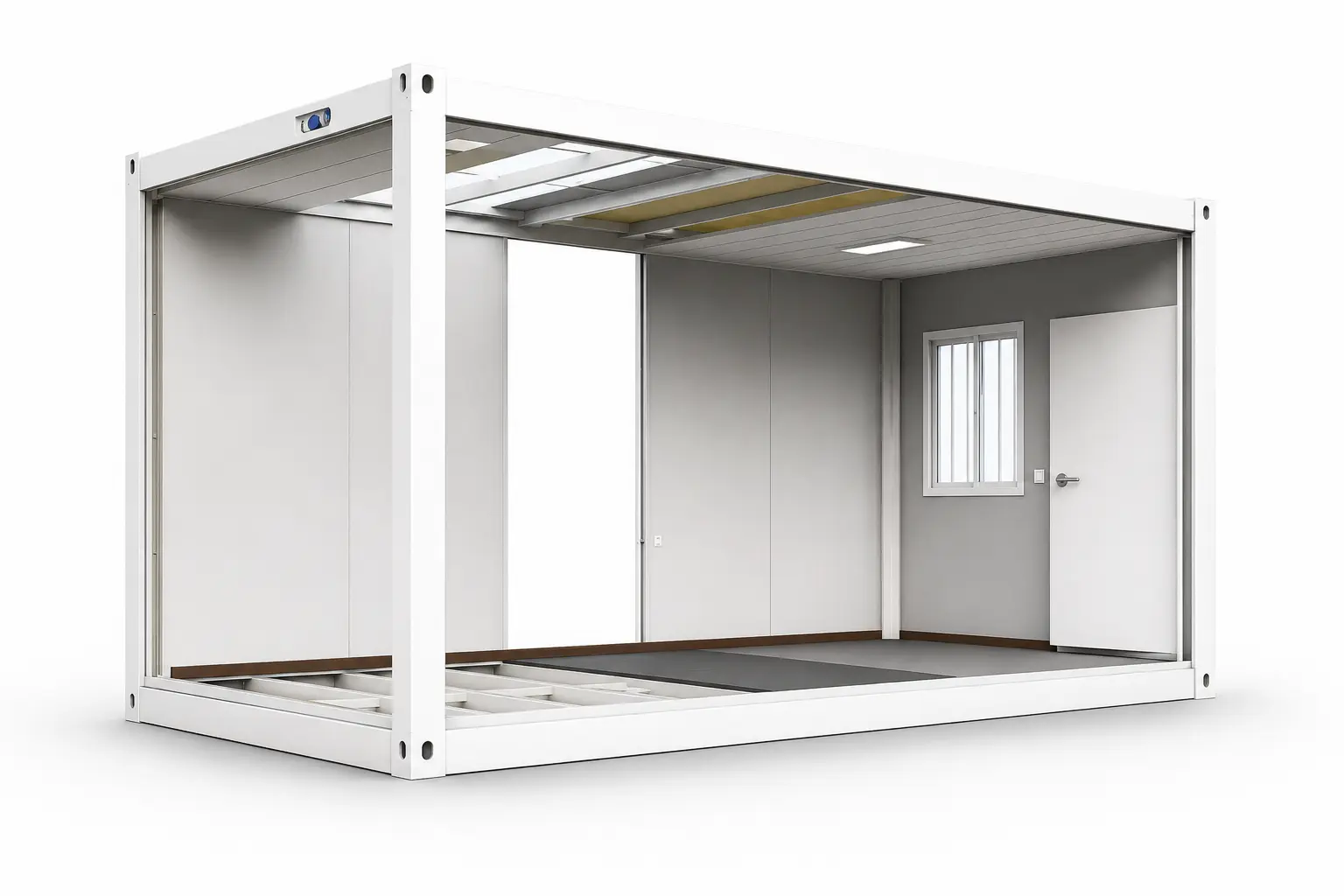
Flat pack container house structure
01Top frame beam 02Corner fitting 03Corner column 04Insulation layer 05Ceiling panel 06Wall panel 07Electrical conduit 08Security window 09Steel door 10Floor board 11Bottom frame beam
01 — MATCHED UNIT SET

Each room ships as one numbered set.

Frame, four corner posts, 15 wall panels, doors and fittings. Every part is labelled. Your crew builds one room at a time. No digging through loose parts.

02 — ASSEMBLY ORDER MATTERS

Frame first. Then panels. Then closing.

There is a set order. Frame first. Then wall panels. Then doors, windows and sealing. Four workers put up five to seven rooms a day this way. See How It's Built for the full steps.

03 — REPETITION IS THE ADVANTAGE

The same room goes up faster.

Flat pack works best when rooms are the same. The more rooms repeat, the faster the camp goes up. Each room sleeps up to four workers. More repeats means a lower cost per bed.

Every part labelled Packing list before we ship Foundation points checked first Crew follows a set order
Component Specs

Flat Pack Component Specifications.

Six parts make up the unit: frame, walls, roof, floor, openings and the connection kit. Below is what each one is made of, with the numbers that matter on a hot, coastal site: fire, heat, wind and rust.

01 / Steel Frame

Bolted Steel Frame

The skeleton. The crew bolts the base frame, roof frame and corner posts together first. Everything else sits on this, so it has to go up square.
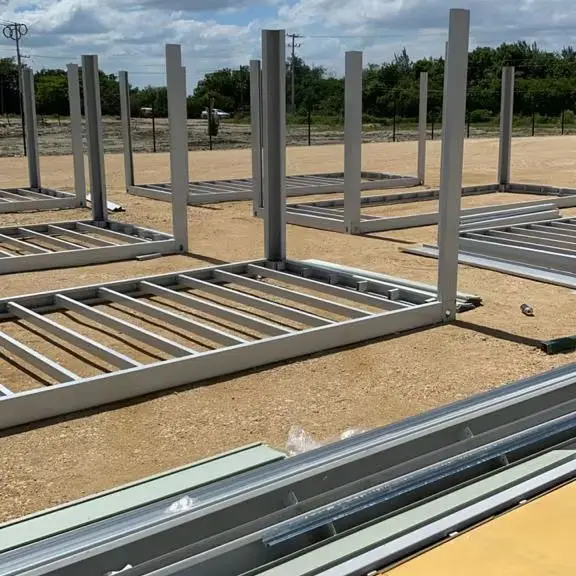
Module Size6058 x 3022 x 2900 mm (external)
Corner Posts150 x 210 mm, 2.5 mm steel
SteelCold-formed galvanized, Q235B
RustZinc coating ≥90 g/m²
StackingUp to 3 floors, earthquake intensity 8
Fire A-grade, does not burn
Heat U-value ≤0.6 W/m²K
Wind Holds grade-12
Earthquake Intensity 8
Rust Galvanized, zinc ≥90 g/m²
Life 20 years
Configs & Applications

One System For The Whole Camp.

Dormitories, offices, toilets, showers, kitchen support and gatehouses all come from the same kit. You order standard room types, combine them into the layout your site needs, and run the whole camp from one supplier.

Standard Rooms, Built To Combine

Start with a standard room, then combine units side by side or stack them up. One box can be a dorm, an office, a toilet or a shower room. Two or more boxes join into bigger offices and meeting rooms. The corridor and stair come as their own boxes, so a full two or three floor block goes together from the same parts.

Standard Layouts 17 single-box types
Worker Dorm up to 4 beds per room
Combine 2 to 4 boxes into one room
Site Shapes I, L, U or courtyard
Camp

Worker Accommodation

The main job. A standard room sleeps up to 4 workers and meets the 4 m² per person rule. Repeat the same room down a 1.8 m corridor and stack up to 3 floors for a full block.

Office

Site Office Blocks

One box makes a 3-person office. Join two boxes for a 6 to 8 person team, or up to four boxes for a meeting room that seats 40 to 50. Same frame as the dorms.

Wet Area

Ablution Blocks

Toilet and shower boxes, built ready for plumbing. A toilet box holds 5 squat pans and 3 urinals. A shower box holds 5 stalls. Floors are waterproof with a built-in drain slope.

Dining

Dining Support Units

Kitchen and serving boxes with the power, exhaust and drainage set in the right place. Wipe-clean inside. Sized to sit next to the dining area.

Security

Gatehouse And Security

A small box at the camp entrance for access control. Door side, window position and the cable runs for CCTV are set before it is built.

Expansion

Remote Camp Expansion

Adding rooms later? The same kit repeats. New phases use the same frame, panels and parts, so the camp grows without bringing in a second supplier.

Installation

How It's Installed, Step By Step.

A flat pack container house goes up with bolts and basic tools, on a prepared foundation, in a set order. Four workers put up one unit in two to four hours. Here is how a unit is installed, from the ground up, plus the three things that decide whether it goes up clean.
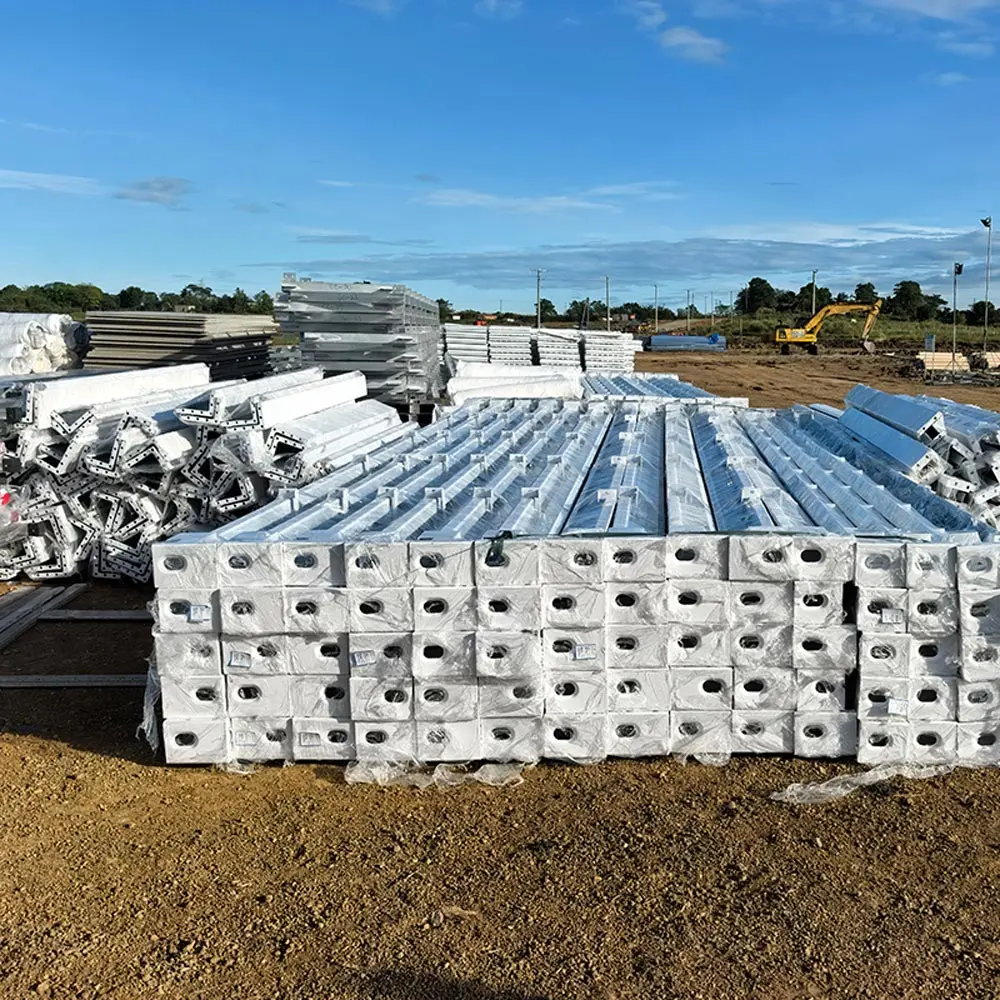
Foundation preparation for flat pack container house installation
01 / Foundation Level ground and footing
01

Foundation & Site Prep

Start on level ground with a simple foundation, a concrete pad or a strip footing. Clear the site, and mark the water, power and drainage points. Leave room for a crane if you are stacking.

Concrete pad or strip footing
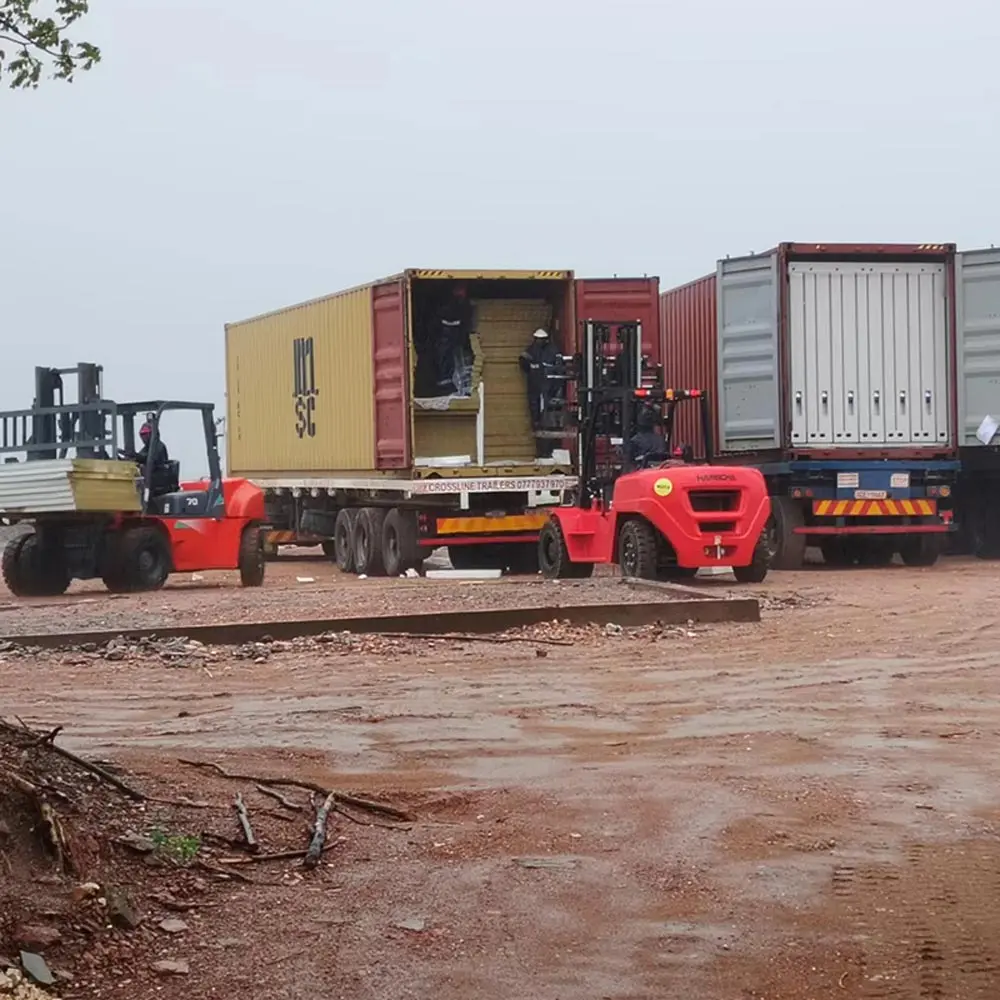
Flat pack container house parts checked on arrival
02 / Unpack Parts checked on arrival
02

Unpack & Check

The unit arrives flat-packed. Unpack it, lay the parts out, and check them against the packing list. Nothing is welded, so there is no fabrication on site.

Check against packing list
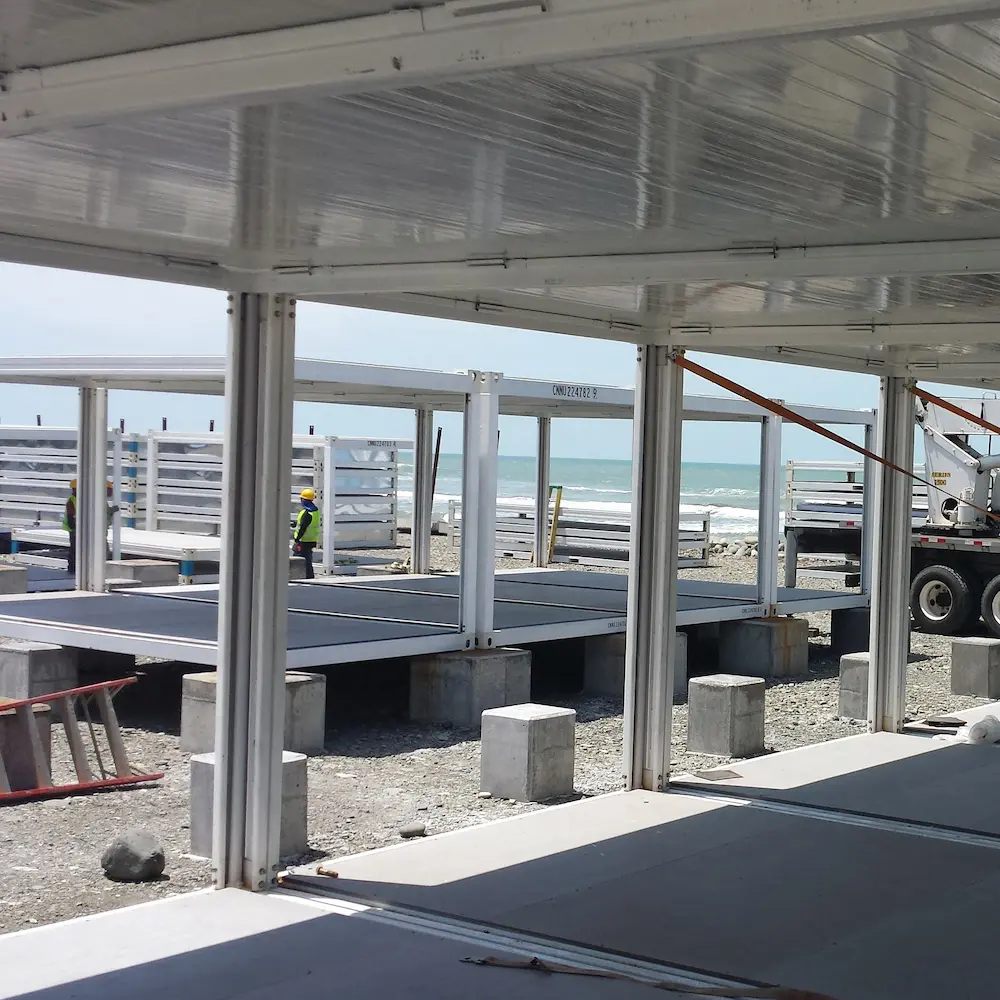
Posts and roof frame bolted up for flat pack container house
03 / Frame Posts and roof frame bolted up
03

Frame & Level

Bolt the base frame down and level it. Stand the four corner posts, then add the roof frame. This frame carries everything, so it goes up first and square.

Bolted, no welding
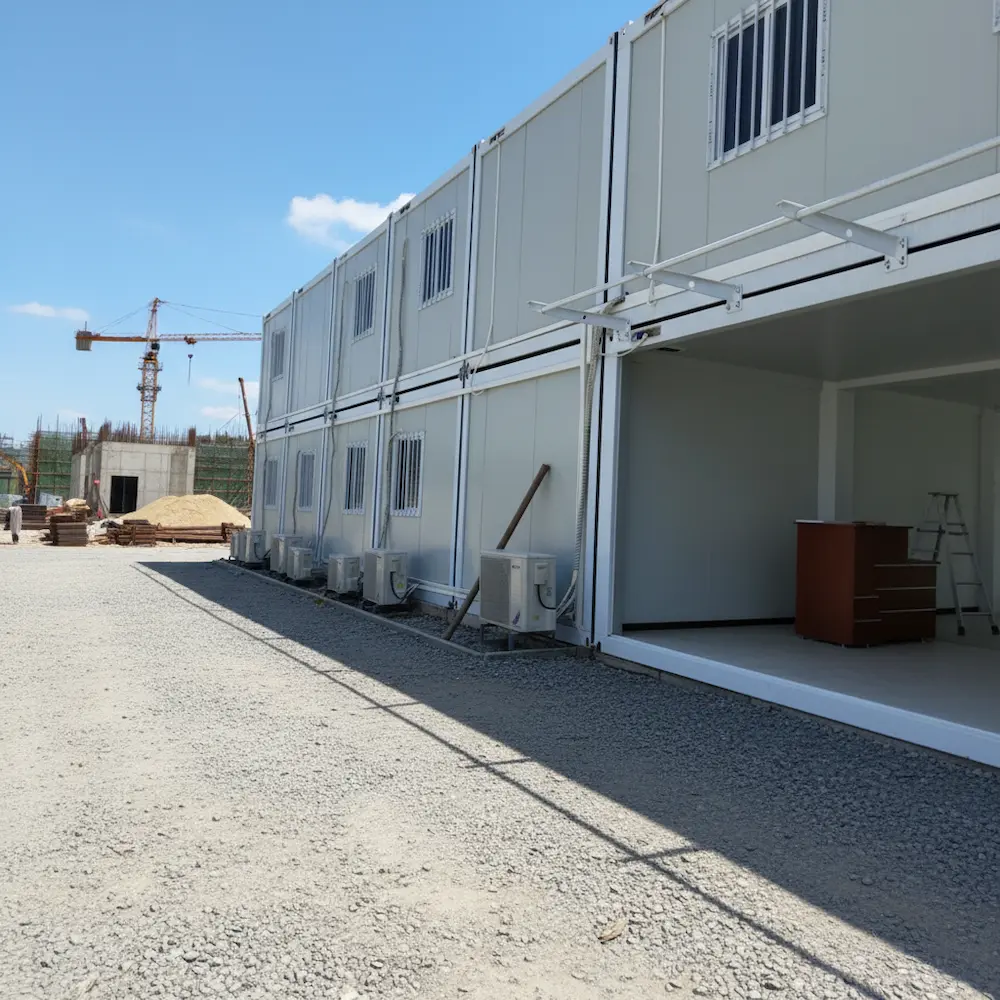
Flat pack container house walls roof doors and windows installed
04 / Panels Walls, roof, doors and windows
04

Panels, Doors & Windows

Slot the 75 mm rock-wool wall panels into the frame and fix the sealed roof panel. Then fit the steel door and the double-glazed windows. A drill and a rubber mallet are about all the crew needs.

Basic hand tools
Flat pack container house sealed serviced and ready
05 / Finish Sealed, serviced and ready
05

Service & Finish

Run the wiring and any plumbing, fit the ceiling, then seal the joints and add the trims. Connect power and water, check it over, and the unit is ready to use.

Ready to use

Three Things That Decide A Clean Build

Level base.

A unit that is not level twists the door and window frames. Shim or grout the base until it is true.

Square frame.

Check the frame is square before you tighten the bolts, or the wall panels will not sit flush.

Sealed joints.

Seal every joint. Unsealed seams are where the first heavy rain gets in.

A four-worker crew works through this in two to four hours, around five to seven units a day. Stacking to three floors uses a crane. Across a camp, the same steps repeat unit by unit. Saudind builds and installs to this process locally in Saudi Arabia.

Crew 4 workers
Time / Unit 2 to 4 hours
Output 5 to 7 units / day
Stacking Crane for 3 floors
Project Evidence

Flat Pack Camps, Delivered.

These are real camps built from this flat pack system and now in use. Each card shows the sector, the size and what the units are used for, so you can see it working at the scale you are planning.

Project 01 / 06

Solar PV Plant Worker Camp, Saudi Arabia

Sector Energy & Minerals
Use Accommodation and office
Size 1,000 to 4,000 m²
Units Flat pack container house
Request a Project Quote
01

Flat Pack
Container House
Questions.

Search demand around flat pack container houses usually concentrates on transport density, assembly speed, foundation work, material specification and the difference from factory-complete prefab units.

Quotation Inputs

Useful enquiry details: quantity, room function, destination, unloading method, floor count, wet-area requirement, panel thickness and whether installation is supply-only or supply-and-install.

A flat pack container house is supplied as a disassembled building set: steel frame members, wall and roof panels, floor system, door and window sets, trims, sealing materials and connection hardware. The parts are packed flat for transport and bolted together on site.

It is not a converted shipping container. The structure is purpose-built for modular camp buildings where repeated layouts, transport density and site assembly speed are more important than receiving a fully finished room in one piece.

Flat pack container house: ships disassembled, loads more units per container, needs site assembly and works well for large repeated camp quantities.

Prefab container house: ships as a more complete room unit, needs less assembly after delivery, usually has higher factory-finished interior quality and is better when the client inspects finish quality before occupancy.

Flat Pack: transport density Prefab: factory completion Both: modular camp use

Flat pack is strongest for projects with repeated room layouts and high unit counts: worker dormitories, site offices, ablution blocks, gatehouses, storage rooms and camp expansion phases.

For procurement planning, it is usually most practical when the project has 50+ beds, a tight delivery schedule, limited shipping budget or remote site access where compact loading reduces transport cost.

One 40HQ container can usually carry 8-16 complete flat pack units. The final loading quantity depends on panel thickness, bathroom content, accessories, furniture, packing method and whether units share the same layout.

FactorEffect On Loading
Standard repeated roomHigher loading density
Wet-area unitLower loading density due to fixtures and plumbing parts
75 mm panelsMore volume than 50 mm panels
Furniture packageMay reduce unit count per container

The confirmed packing list should match the approved layout, including frame members, panels, door/window sets, fasteners, trims, sealing materials and any MEP or furniture package. Each set should be numbered by unit and assembly sequence.

For remote sites, confirm unloading equipment, site access width, storage area and whether the delivery route allows a 40HQ container truck or requires smaller local transfer vehicles.

Under prepared site conditions, one standard unit can normally be assembled in 2-4 hours by a trained crew of four using basic hand tools. The sequence is base frame, corner columns, top frame, wall panels, roof panels, floor finish, doors, windows, trims and sealing.

Bathroom units, mixed layouts, poor foundation level, missing tools or weather interruptions can extend assembly time.

A crane is not normally required to lift a complete finished room, because the unit is assembled from packed parts. The site still needs a controlled unloading method such as forklift, crane truck or planned manual handling depending on package weight and ground condition.

For two-floor or three-floor layouts, lifting equipment may be needed for upper-level placement, stairs, roof materials or large package handling.

Standard single-floor units require a level support base such as concrete pads, strip footings, steel supports or another engineered flat bearing surface. The foundation should be ready before delivery so frame alignment and bolted connections are not delayed.

For stacked buildings, confirm ground bearing capacity, column support points, stair placement and bracing requirements before production drawings are released.

The standard box size used on this page is 6055 x 2990 x 2896 mm. Standard flat pack buildings can be configured for single-floor, two-floor or three-floor layouts when the frame, connection and foundation details are engineered for stacking.

ItemStandard Reference
Module size6055 x 2990 x 2896 mm
Stack heightUp to 3 floors when engineered correctly
Wall panel50-75 mm rock-wool sandwich panel
Typical useDormitory, office, welfare and sanitary units

Yes. Common custom items include internal partition layout, door and window position, wall panel thickness, exterior colour, floor finish, bathroom layout, AC opening, electrical route and furniture package.

For batch production, customisation should be frozen before production drawings and packing lists are released. Late changes can affect panel cutting, loading density and site assembly sequence.

Get a Quote

Start Your
Project Quote
Today

Send us your project details and our Saudi-based factory team will prepare a tailored proposal within 24 hours — with specs, production lead time, local delivery plan, and installation support.

Saudi-Made-ar
Address

92P8+MG, Southern Hyt, Riyadh 14575

Support

+966 532580666
info@saudind.com

Request a Quote

Municipality_&_Events